01
National

People-led. Data-informed. Locally rooted.
ECOsquad is a unified citizen volunteer movement helping governments track, measure and improve sustainable development where it matters most: in communities.
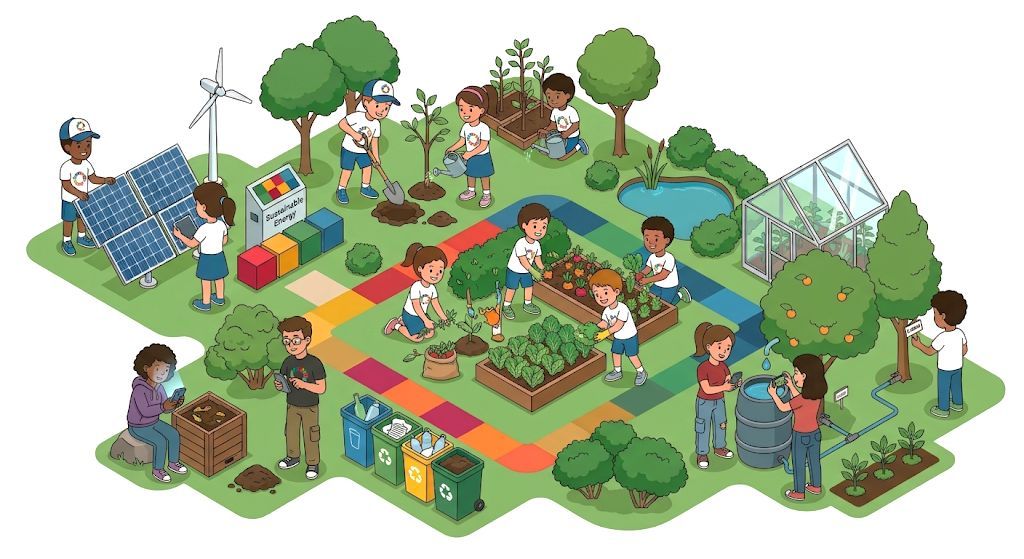
The mission
Sustainable progress depends on disciplined local action. ECOsquad prepares students and active citizens to support measurement, delivery and community participation at every level.
Operational framework
ECOsquad connects national ambition with the local evidence needed to deliver it—aligning trained volunteers with the indicator frameworks used at every administrative level.
National
State
District
Block
Organizational architecture
A disciplined, tiered structure aligned with Gram Panchayat, Block, District and State boundaries makes coordinated action possible without losing local context.
High school, college and university students working alongside active local citizens.
A tiered network that mirrors administrative boundaries and supports local coordination.
Social auditing, digital data collection, disaster response and community mobilization.
The work
ECOsquad gives public institutions a trained, community-based force that can verify what is happening, respond when it matters, and help better practices take root.
Audit localized welfare schemes, gather qualitative feedback and help close gaps in local reporting.
Observe · verify · reportSupport first response during climate emergencies, environmental hazards and public-health crises.
Prepare · respond · recoverRun focused local campaigns for water conservation, cleaner farming and responsible resource use.
Inform · involve · sustainIndicative projects
Verify beneficiary lists, public distribution systems and midday-meal nutrition.
Cross-check immunization records, track out-of-school children and support literacy.
Advance welfare awareness and map community water-testing results to district dashboards.
Run energy audits, promote LED transitions and track village-level waste segregation.
Lead afforestation drives and monitor sapling survival for forest and carbon metrics.
Implementation roadmap
Build the model in the field, strengthen it with shared tools, then expand nationally.
Establish chapters in selected aspirational districts with state planning departments and academic institutions.
Launch unified training mapped to SIF and DIF parameters, supported by open-source field reporting.
Formalize integration with national youth programmes and grow a standing volunteer force.
Expected outcomes
Reduced reporting lag at district and block level.
A generation fluent in social, economic and environmental governance.
Measurable movement through active, boots-on-the-ground intervention.
People-led action can bring discipline, better data and sustained development to the last mile.